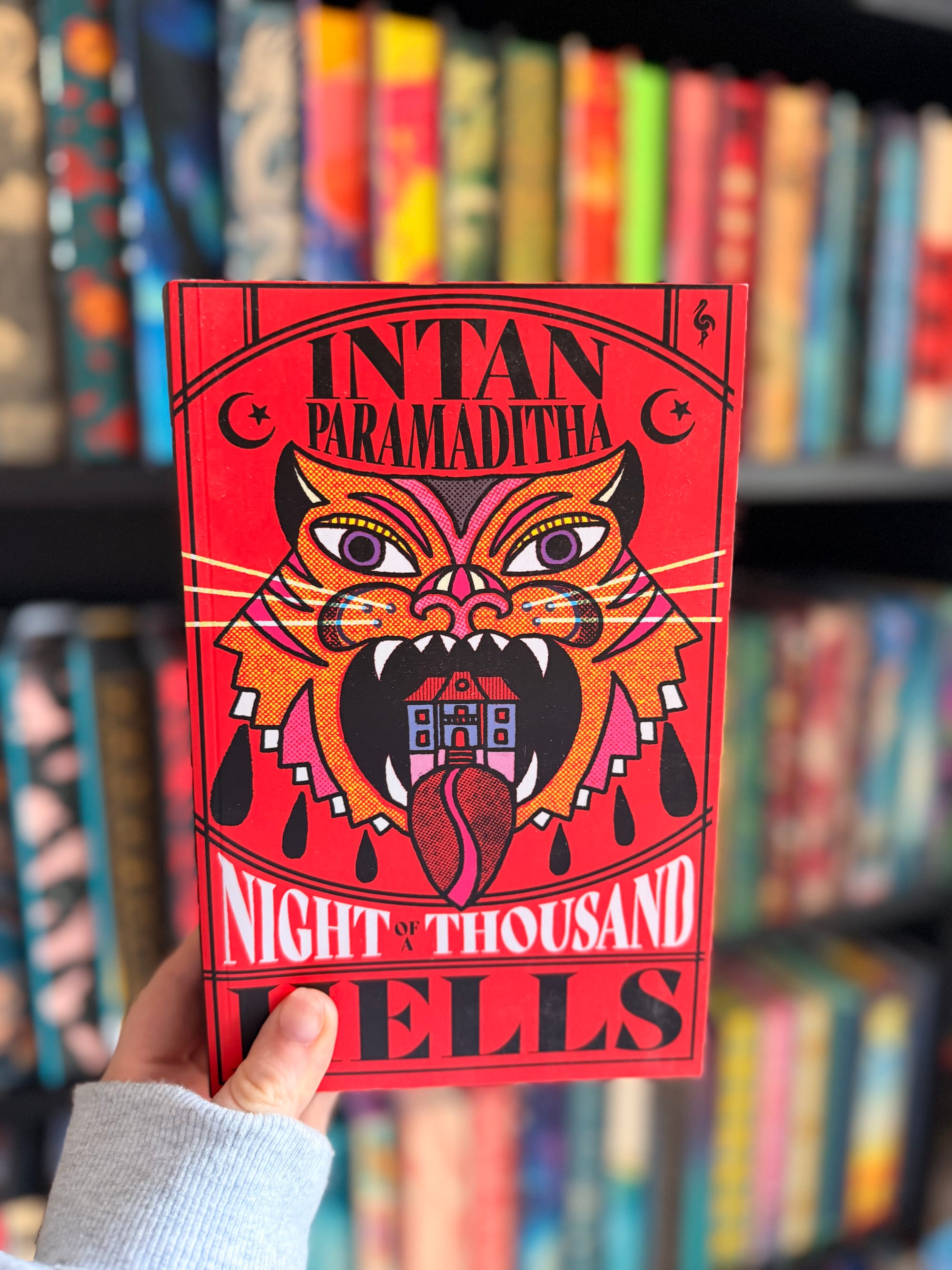
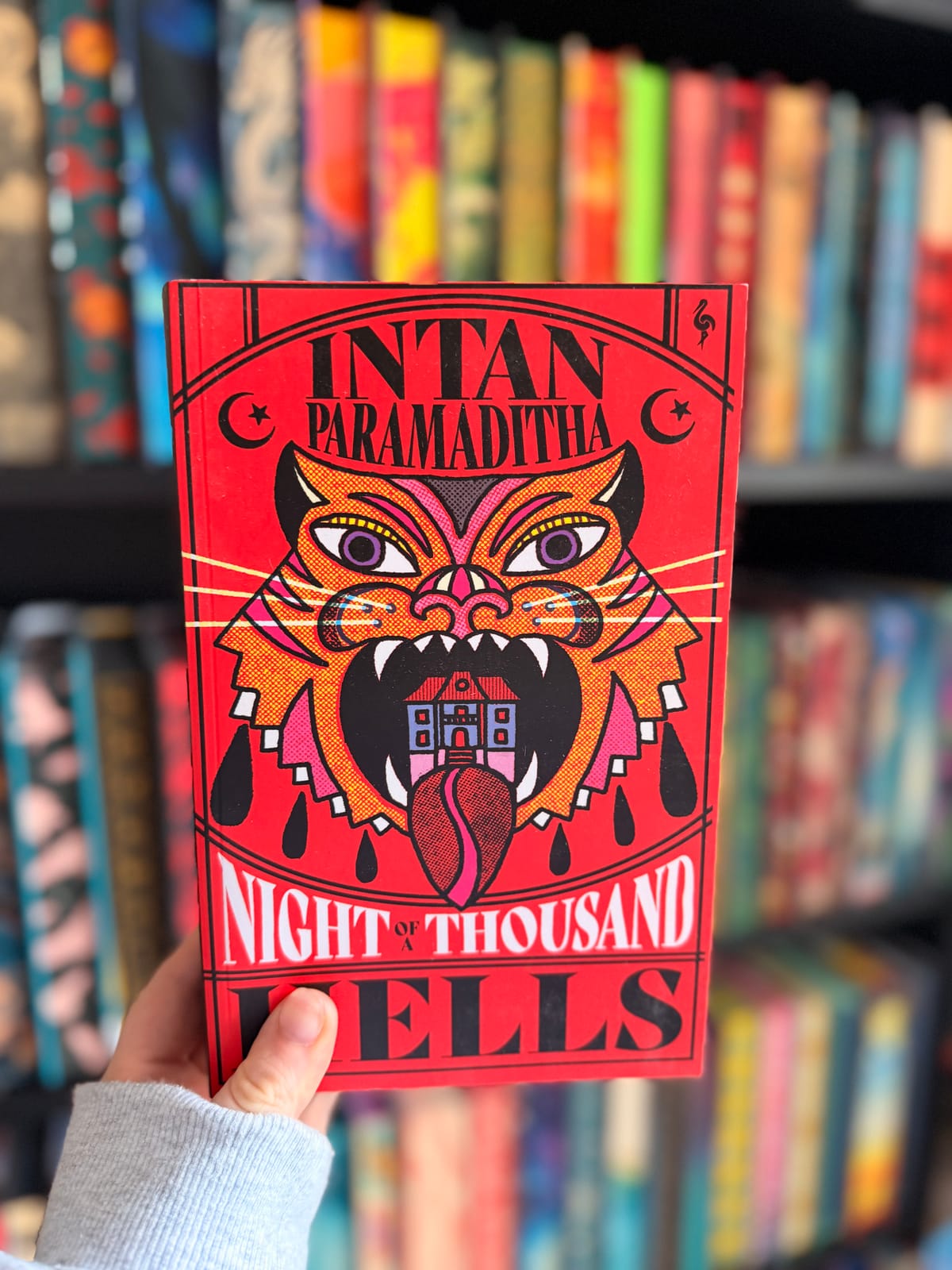
Night of a Thousand Hells.
By Intan Paramaditha.

What happens when the roles assigned to women become impossible to escape?
Night of a Thousand Hells is an ambitious blend of family drama, Indonesian folklore, horror, faith and political commentary centred around three sisters: Muti, Maya and Annisa.
The story begins from an incredibly dark place, with one of the sisters becoming a suicide bomber. What follows isn't simply an attempt to understand that single devastating act. Instead, the story reaches backwards through generations of their family, uncovering the expectations, secrets and beliefs that have shaped the women within it.
At the centre of this history is their grandmother and a prophecy involving three roles: penjaga, pengelana and pengantin. The idea that each woman has a particular place she is expected to occupy becomes increasingly important, especially as the sisters wrestle with the difference between the identities imposed upon them and the lives they might have chosen for themselves.
I was particularly impressed by how much Intan Paramaditha brings together without making the different elements feel completely disconnected. Folklore sits alongside contemporary issues, horror alongside family relationships and Islamic mysticism alongside questions about gender, migration and politics. There are even elements of fairy tales and verse woven throughout.
It creates something difficult to categorise, which I really enjoyed.
Despite the supernatural and Gothic elements, the family relationships are what gave the story its emotional weight for me. There are relatives who judge from the sidelines, complicated bonds between sisters, parental expectations and years of resentment existing alongside genuine love. These dynamics make the stranger elements feel surprisingly intimate.
The sisters are also allowed to respond differently to the lives they've inherited. They don't experience grief, responsibility or rebellion in identical ways, and I liked that their relationships could contain affection and frustration simultaneously. Sisterhood here isn't automatically comforting simply because they're family.
The movement between different periods and places also works well. Rather than feeling unnecessarily complicated, the shifting timeline suits a story concerned with memory and inheritance. The past continually intrudes upon the present, revealing how decisions made by one generation can quietly determine the possibilities available to the next.
I found the exploration of usefulness particularly interesting. There is an uncomfortable pressure placed upon these women to fulfil particular purposes, whether within their family, religion or wider society. Being needed might initially appear to give someone value, but Paramaditha also examines how easily that expectation can become another form of confinement.
Faith is treated with similar complexity. It can provide meaning and comfort while simultaneously becoming tangled with shame, obligation and control. The story doesn't reduce those contradictions to something simple, which makes its examination of belief much more interesting.
There is a lot happening here, from Indonesia to the United States and Australia, but the cultural specificity was one of my favourite aspects. I loved discovering the folklore and traditions woven through the story rather than having them used simply as decorative supernatural elements.
Night of a Thousand Hells is strange, clever and frequently unsettling. Beneath its ghosts, prophecies and darkness is a story about three women confronting what their family has handed down to them and deciding how much of that inheritance they are willing to carry.
Thank you so much to Daniela and the team at Europa Editions for sending me a copy as part of their new catalogue! The book is out now and available to purchase.
Support a local and independent bookshop and purchase the book here.